
Metal Shears / Notchers
Collection: Metal Shears / Notchers
Metal shears, notchers, and ironworkers are essential fabrication tools for shops handling structural steel, sheet metal, and plate work. These machines range from benchtop 41" shears for light-gauge material to industrial 52" units and specialized tube notchers capable of producing clean, precise cuts in mild steel, stainless, and aluminum. Shops use them for architectural metalwork, HVAC ductwork, sign fabrication, and structural prep. Grizzly Industrial, a cornerstone brand in PSE's inventory since 1985, offers rugged stationary equipment designed for production environments where repeatability and durability matter. When selecting metal shears or notchers, capacity (throat depth and material thickness), motor horsepower, three-phase availability, and cutting accuracy directly impact throughput and job quality. Whether you're upgrading from manual equipment or outfitting a new fabrication bay, the right metal shear or notcher reduces labor time and material waste.
How to Choose the Right Metal Shears / Notchers / Ironworkers
- Verify maximum cutting capacity matches your typical material thickness—most benchtop units cut up to 18-gauge; industrial models handle 1/4" or thicker.
- Confirm motor horsepower and voltage/phase availability (single-phase 110V vs. 220V vs. three-phase 460V) before purchase to avoid installation delays.
- Measure available floor space; benchtop shears occupy 4–6 feet but require clearance for material feed and operator movement.
- Check throat depth and cutting length for your longest anticipated cuts; 41" to 52" lengths suit most fabrication workflows.
- Review blade material and sharpening intervals; hardened steel blades require professional maintenance or replacement kits.
- Confirm warranty terms, spare parts availability, and local service support—critical for minimizing downtime in production shops.
- Assess cutting angle adjustment and hold-down clamp pressure; precise settings reduce material slippage and edge burr.
Model Comparison
| Model | Cutting Capacity / Bed Length | Material Thickness (Mild Steel) | Motor / Phase | Throat Depth |
|---|---|---|---|---|
| Grizzly T32957 — 52" Sheet Metal Shear | 52" length | Up to 16-gauge | 1.5 HP / Single-phase | 4.5" |
| Grizzly Industrial Heavy-Duty 50" Electric Metal Shear — Polar Bear Series | 50" length | Up to 14-gauge | 2 HP / Three-phase 460V | 5" |
| Grizzly Industrial 41" Benchtop Metal Shear | 41" length | Up to 18-gauge | 1 HP / Single-phase 110V | 3.5" |
| Grizzly Industrial 4" x 79" Abrasive Tube Notcher | 4" diameter tubing, 79" bed | Up to 1/4" wall thickness | 1.5 HP / Single-phase | N/A — rotary notch |
Frequently Asked Questions
What motor horsepower do I need for cutting 1/8" mild steel consistently?
For 1/8" mild steel, a 1.5–2 HP motor is adequate for intermittent shop work. However, production environments cutting continuously should use 2+ HP to reduce thermal stress on the motor and maintain consistent blade speed, which prevents edge distortion and premature blade wear.
Can I run a three-phase metal shear on single-phase 220V power?
No. Three-phase motors require true three-phase utility power (460V standard in North America). A phase converter can enable operation but adds cost and efficiency loss. If only single-phase is available, specify equipment rated for 110V or 220V single-phase operation to avoid motor damage.
What's the difference between a metal shear and a tube notcher?
A metal shear cuts flat sheet, plate, and bar stock in straight lines with scissor or guillotine blades. A tube notcher uses a rotary abrasive wheel to profile tube and pipe ends for welding—creating saddle or end-mitered cuts that reduce fabrication time compared to manual grinding or cutting.
How do I choose between a 41" benchtop and 52" industrial shear?
Benchtop 41" models suit small shops and occasional use; they need minimal floor space and single-phase power. Industrial 52" models are for high-volume shops requiring longer cuts and faster blade recovery. Consider production volume, material length, and available electrical service—benchtop cuts faster on thin gauge; industrial handles thicker stock and production runs.
What maintenance keeps metal shear blades sharp and cuts clean?
Inspect blades weekly for nicks or burrs; debris under the blade ruins edge geometry. Clean blade surfaces after each shift. Sharpen blades professionally or replace using the manufacturer's replacement kit every 6–12 months depending on volume. Dull blades produce ragged edges and require higher feed force, accelerating motor wear.
-
Baileigh Industrial - 220V 1Phase 44 Ton 4 Station Ironworker


- Regular price
- $11,219.00
- Sale price
- $11,219.00
-
Baileigh Industrial - 220V 3Phase 50 Ton 5 Station Ironworker


- Regular price
- $21,119.00
- Sale price
- $21,119.00
-
Baileigh Industrial - 220V 1Phase 50 Ton 5 Station Ironworker


- Regular price
- $22,329.00
- Sale price
- $22,329.00
-
Baileigh Industrial - 220V 3Phase 62 Ton 5 Station Ironworker


- Regular price
- $26,839.00
- Sale price
- $26,839.00
-
Baileigh Industrial - 220V 1Phase 62 Ton 5 Station Ironworker
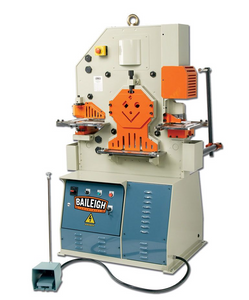

- Regular price
- $28,434.00
- Sale price
- $28,434.00
-
Baileigh Industrial - 220V 3Phase 44 Ton 4 Station Ironworker


- Regular price
-
$10,097.00
See Lower Price in Cart
-
Baileigh Industrial 220V 3Phase Dual Operator 95 Ton 5 Station Ironworker
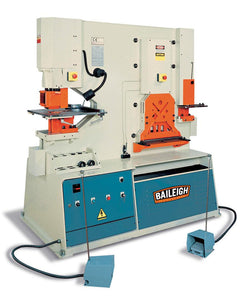

- Regular price
-
$51,149.00
See Lower Price in Cart


